Program Execution Flow
Reference: Execution Angleboye@Bamboofox.
Static Execution
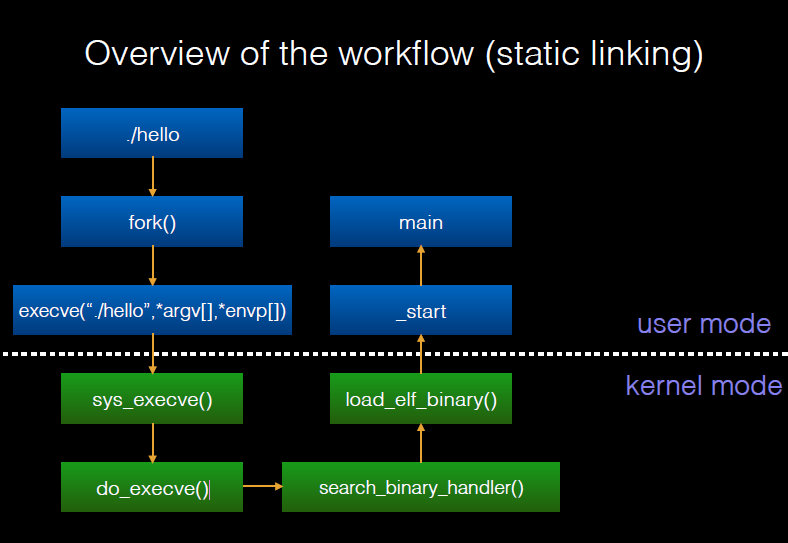
Here is the basic process of static program execution.
Dynamic Execution
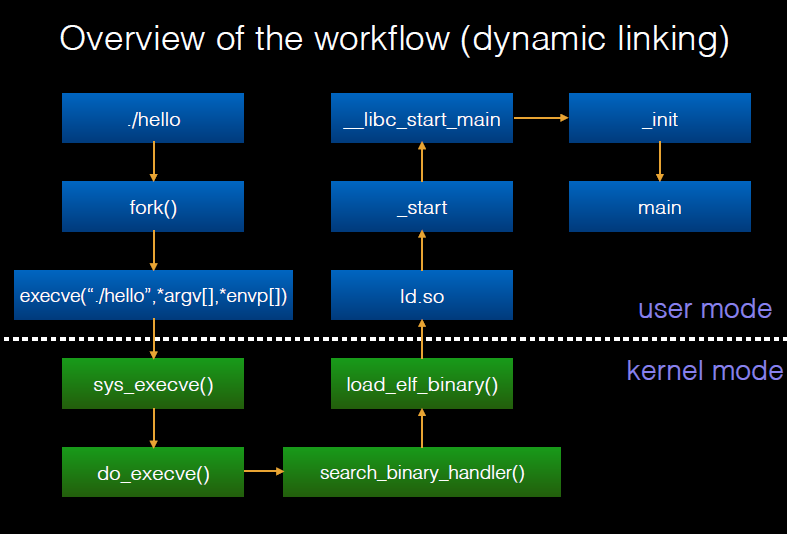
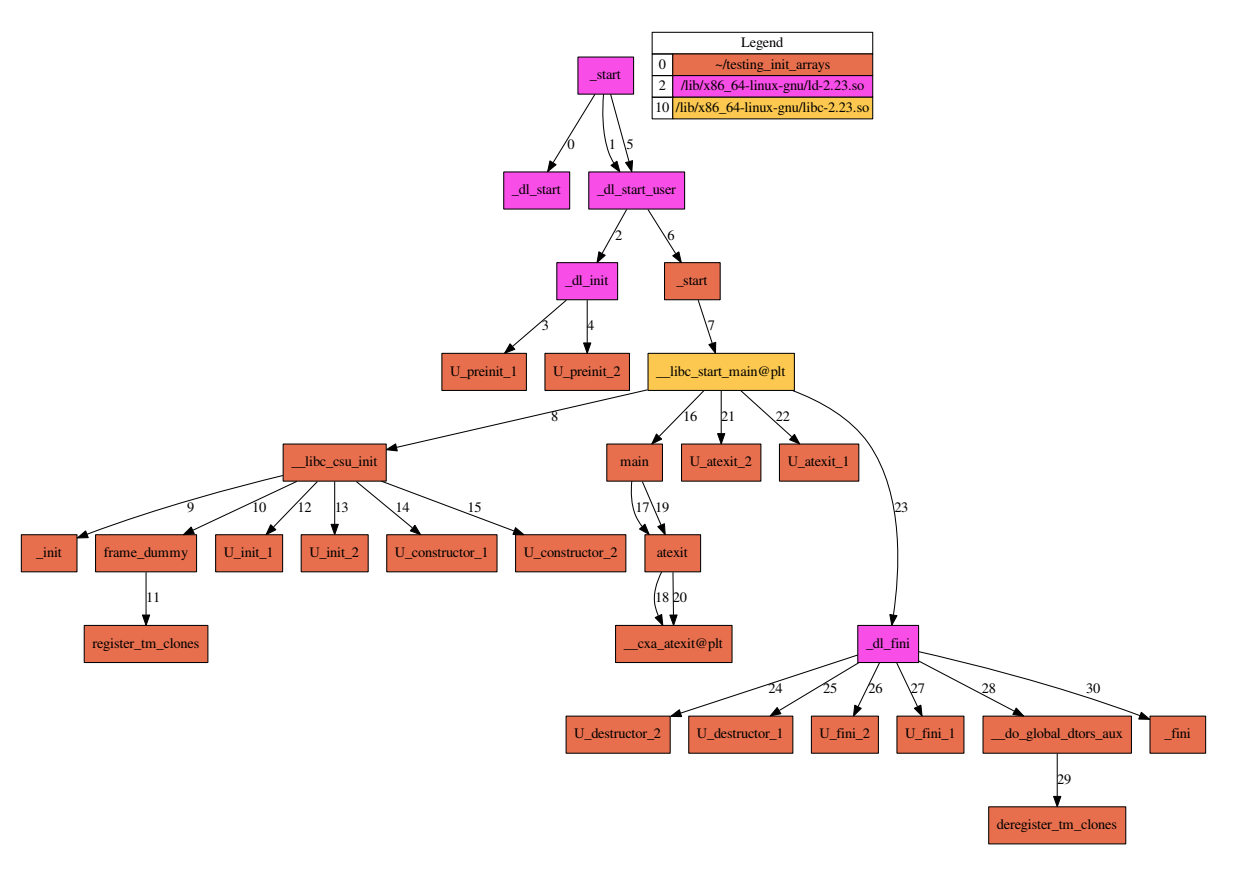
Here is another more detailed diagram.
Basic Operation Description
sys_execve
This function is mainly used to execute a new program, i.e., to execute the program we want to run. It checks the corresponding argv, envp, and other parameters.
do_execve
This function opens the target image file and reads a specified length (currently 128) of bytes from the beginning of the target file to obtain the basic information of the target file.
search_binary_handler
This function searches the binary file type queue that supports handling the current type, in order to allow the handlers of various executable programs to perform the appropriate processing.
load_elf_binary
The main processing flow of this function is as follows:
-
Check and obtain the header information of the ELF file.
-
If the target file uses dynamic linking, use the .interp section to determine the loader path.
-
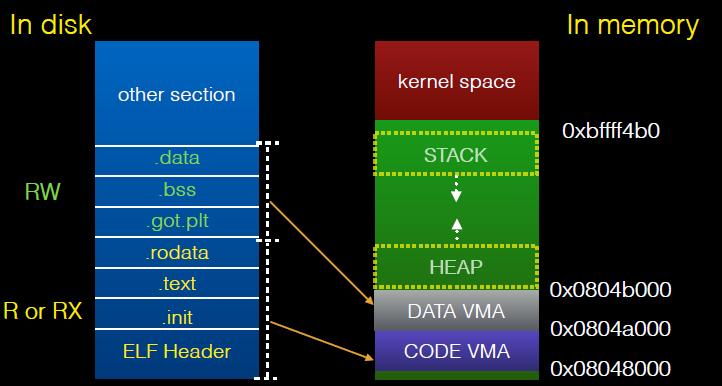
Map the corresponding segments recorded in the program header into memory. The program header contains the following important information:
-
The address to which each segment needs to be mapped.
- The corresponding permissions of each segment.
- Records which sections belong to which segments.
The specific mapping is as follows:
Handle different cases:
- In the case of dynamic linking, change the return address of sys_execve to the entry point of the loader (ld.so).
- In the case of static linking, change the return address of sys_execve to the entry point of the program.
ld.so
This file has the following functions:
- Mainly used to load the shared libraries recorded in DT_NEED of the ELF file.
- Initialization work:
- Initialize the GOT table.
- Merge the symbol table into the global symbol table.
_start
The _start function passes the following items to libc_start_main:
- Starting address of environment variables
- .init
- Initialization work before starting the main function.
- fini
- Cleanup work before program termination.