WIFI
802.11is the current standard for wireless LANs. Common authentication methods include:
- No security enabled
WEPWPA/WPA2-PSK(Pre-Shared Key)PA/WPA2 802.1X(radiusauthentication)
WPA-PSK
The general authentication process is shown in the figure below:
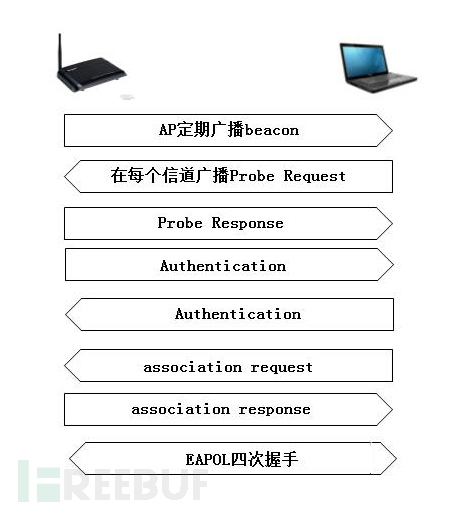
The four-way handshake process:
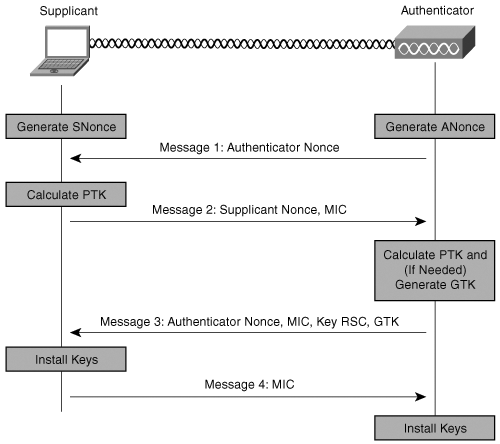
- The four-way handshake is initiated by the authenticator (AP), which generates a random value (ANonce) and sends it to the supplicant.
- The supplicant also generates its own random SNonce, then uses both Nonces along with the PMK to generate the PTK. The supplicant replies with message 2 to the authenticator, along with a MIC (Message Integrity Code) for PMK verification.
- The authenticator first verifies the MIC and other information sent by the supplicant in message 2. After successful verification, it generates the GTK if needed, then sends message 3.
- The supplicant receives message 3, verifies the MIC, installs the keys, and sends message 4 as a confirmation. The authenticator receives message 4, verifies the MIC, and installs the same keys.
Example
Shiyanba:
shipin.cap
Based on the large number of Deauth attacks, it can be determined that this is a traffic capture from a wifi cracking attack.
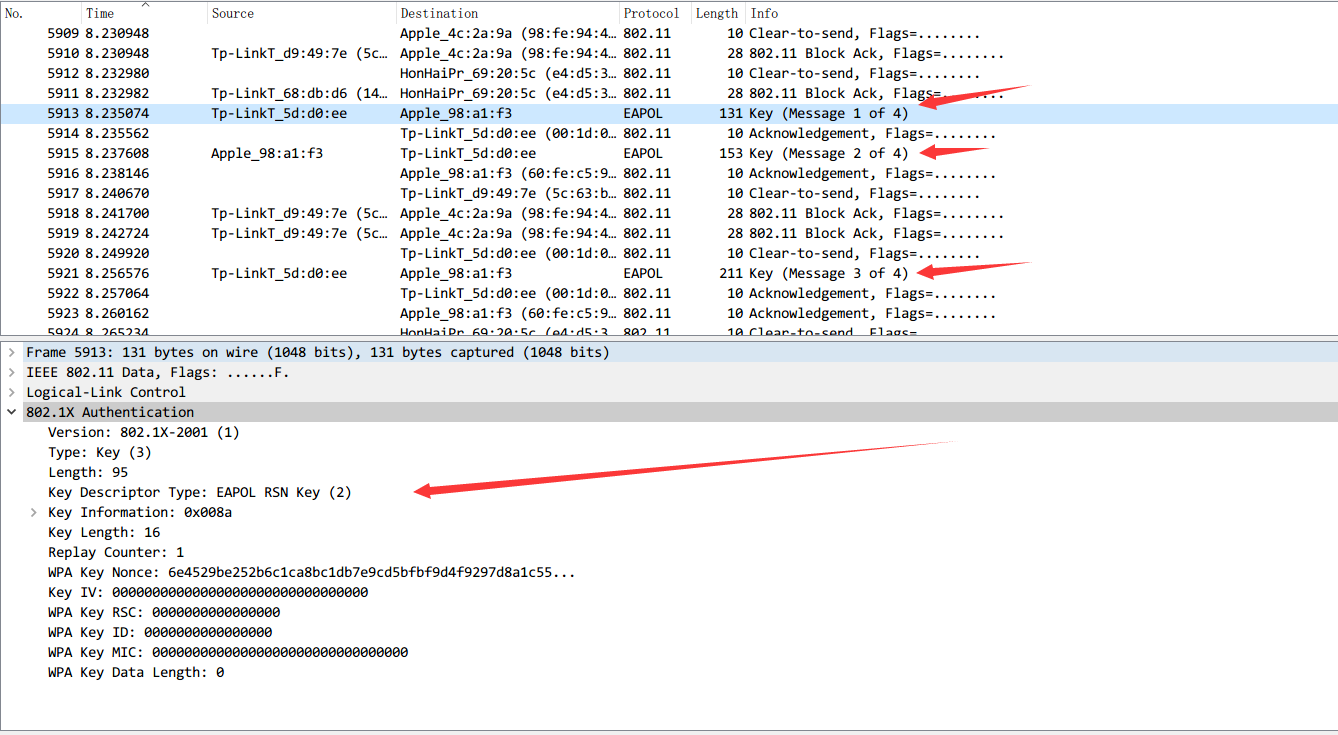
The handshake packets were also successfully identified:
Next, we crack the password:
linux:aircracksuitewindows:wifipr, faster thanesaw,GTX850can reach nearly10w\s :)
After obtaining the password 88888888, enter it in wireshark via Edit -> Preferences -> Protocols -> IEEE802.11 -> Edit in the format key:SSID to decrypt the wifi packets and view the plaintext traffic.
KRACK related: https://www.krackattacks.com/